About Jared Lyon
Building institutions where serendipity scales.
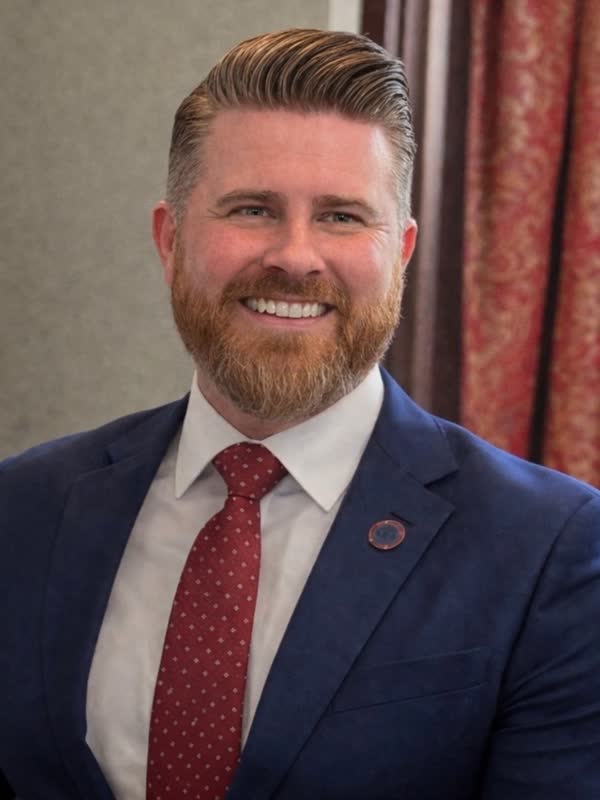
For more than a decade, Student Veterans of America operated as a national test of whether a chapter-based institution could be built, and then renewed, on operating discipline rather than on any single funding moment. Jared Lyon led that institution through the decade as President and CEO from January 2016 to January 2026, after stepping in as Acting CEO in August 2015. He served as Senior Advisor through the planned succession from January to June 2026.
During that period, the chapter network grew from roughly 400 to more than 1,600 across all 50 states and three countries. Across the twelve-year tenure, the team stewarded more than $71.7 million in cumulative organizational revenue — $61.35 million audited (FY2014–FY2025) under eleven consecutive unqualified opinions, plus $10.4 million FY2026 preliminary unaudited (CLA audit issuance pending August 2026) — including an $8 million unrestricted gift from MacKenzie Scott, the largest single gift in the organization’s history, received and stewarded as a governance test. The coalition the organization helped convene was central to the Harry W. Colmery Veterans Educational Assistance Act, the Forever GI Bill, which passed both chambers of Congress with unanimous support and was signed into law in 2017. The organization also produced the National Veteran Education Success Tracker (NVEST) in 2017, a public–private research partnership with the National Student Clearinghouse and the U.S. Department of Veterans Affairs, funded by Google, the Lumina Foundation, and the Kresge Foundation. NVEST analyzed nearly one million veteran records, documented a 72 percent student-veteran academic success rate, and has been cited by the White House, the Government Accountability Office, and Congress. The 2026 CEO succession that named his successor was led by Korn Ferry, the same firm that conducted the 2015 search that placed him.
The through line across that work is a particular argument about what national institutions are for. When they work, they create conditions for serendipity at scale: rooms, chapters, conferences, and pathways where people who would otherwise never have met find one another, sort themselves into work, and stay connected long enough for the work to compound. Jared’s academic argument is that the public-purpose rationales that originally justified federal investment in higher education did not disappear over the past eighty years, but became buried, fragmented, narrowed, and subordinated. His dissertation, Federal Higher Education Policy and the Layered Contest over National Capacity, 1944–Present, is the long-form version of that argument. The institutional work is the short-form version. He lives in Tampa, Florida, with his family.
How the Work Came Together
A career spent moving through every layer of the same kind of institution. The vantage came from the movement, not from any one position.
Submariner and Diver, United States Navy Submarine Force
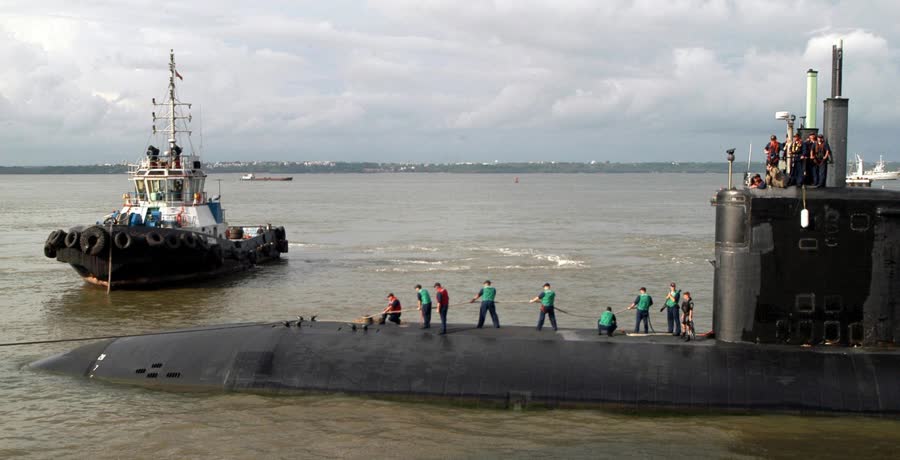
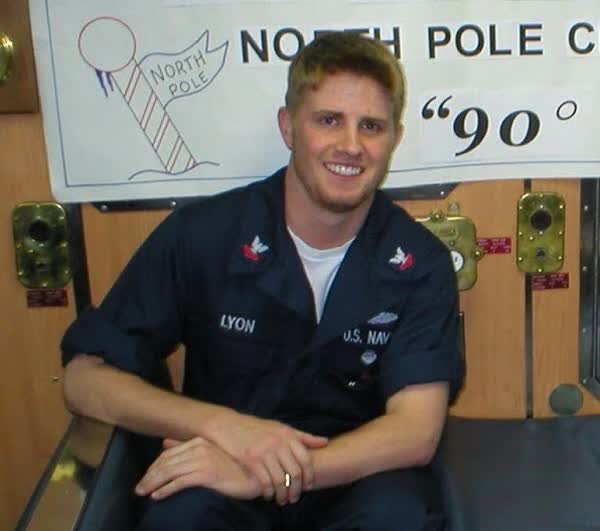
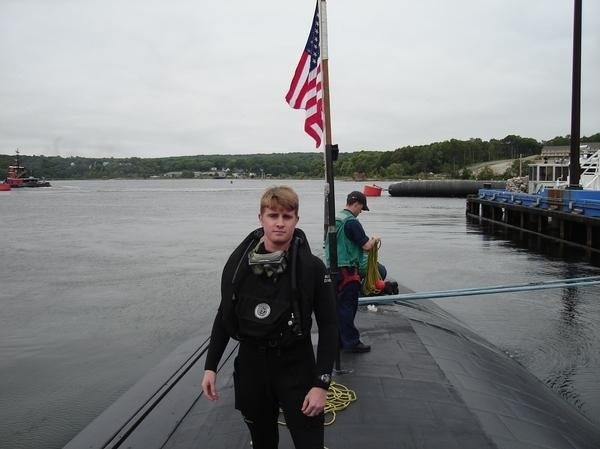
Enlisted out of high school. Served as a Submariner and Diver in the U.S. Navy Submarine Force aboard USS Alexandria (SSN 757) from 2001 to 2005, during the opening years of the Global War on Terrorism. Earned the Navy Unit Commendation and the Navy Good Conduct Medal. The institutional habit Jared carried out of that service is simple: in a system where mistakes cascade, the discipline that keeps the institution intact is the discipline you install ahead of time, not the one you improvise under pressure.
Northrop Grumman, Brevard Community College, and the Washington Nationals
Out of the Navy in 2005 and home in Melbourne, Florida, Jared worked full-time and took classes at what was then Brevard Community College (now Eastern Florida State College), where he earned an A.A. Two years at Northrop Grumman (2005–2007) were followed by three with the Washington Nationals Baseball Club (2007–2010) as Manager of Florida Operations, running the club’s $4.5M spring-training and player-development operation as leaseholder of the publicly-owned, 8,100-seat Space Coast Stadium. The years were a first read on civic infrastructure from the inside: county economic-development funds, tourist-development tax policy, and the difference between an institution that earns its public trust and one that simply assumes it.
College in Tallahassee, then national veteran-education work in Syracuse
In 2010 Jared left Melbourne for Tallahassee to finish his undergraduate degree at Florida State University, completing a B.S. in social science in 2011. The same year he was named SVA’s National Student Veteran of the Year, his first read on the network he would later lead. He then moved to Syracuse to take a role at Syracuse University’s Institute for Veterans and Military Families (IVMF) as National Program Manager for the Entrepreneurship Bootcamp for Veterans, leading an eight-university consortium and growing annual program funding 42 percent. While at IVMF he completed his Master of Public Administration at the Maxwell School (2012–2013). It was a first read on what scaling a chapter-and-affiliate network actually requires when the affiliates are universities.
Joining the institution he had once joined as a member
In 2014 Jared left Syracuse to join Student Veterans of America in Washington, DC as Chief Development Officer, soon expanded to Chief Development Officer and Executive Vice President of Operations. He negotiated SVA’s then-largest corporate commitment, implemented Salesforce CRM, doubled individual giving, and built the major-gift discipline (moves management, stage gates, win-rate forecasting, and board-level reporting) the organization would later scale. In August 2015 he stepped in as Acting President & CEO with the organization carrying approximately $2.1 million in debt and roughly $43,000 in operating liquidity.
Building, renewing, and handing off the institution
After a national search led by Korn Ferry, Jared was confirmed as President and CEO in January 2016. The decade that followed produced the Forever GI Bill coalition outcome (the Harry W. Colmery Veterans Educational Assistance Act, which passed both chambers of Congress with unanimous support and was signed into law in 2017); an $8 million unrestricted gift from MacKenzie Scott, deployed against a Bridgespan-facilitated five-year strategic plan; the NVEST research base, produced with the National Student Clearinghouse and the U.S. Department of Veterans Affairs and funded by Google, the Lumina Foundation, and the Kresge Foundation; and a roughly fourfold expansion of the chapter network from approximately 400 to more than 1,600 affiliates. The organization moved from $2.1 million in debt and roughly $43,000 in liquidity to debt-free, with a $1 million board-designated reserve and a balanced $8.5 million operating budget. The 2026 CEO succession, again led by Korn Ferry, transitioned SVA to its next President & CEO from inside the senior leadership Jared had built.
The argument, carried into the next institution
Across the arc, Jared has worked at every layer of a chapter-based national institution: member, staff, acting executive, confirmed CEO, and now board-advised institution builder. The vantage on what scaling, governing, and renewing one actually requires came from movement across those positions, not from any one of them. He is a Ph.D. student at Syracuse’s Maxwell School with coursework complete and his dissertation committee forming, teaches entrepreneurship at Syracuse, and serves on the George W. Bush Institute Advisory Council, the U.S. Department of Veterans Affairs Advisory Committee on Education, the Global War on Terrorism Memorial Foundation Board of Advisors, and Florida State University’s Division of Student Affairs Development Council. The work ahead is the same argument, carried into the next institution where it can be designed in, tested at scale, and held against actual outcomes.
What Distinguishes His Experience
The institutional pattern is portable. The chapter logic that worked for one student-veteran population was never a story about veterans. It was a story about what national institutions can do when they are designed to manufacture the conditions for relationships, mentors, second chances, and unscripted bridging across difference. Veterans were a tractable test case. The next set of test cases sits across education, workforce, civic trust, and public purpose, in institutions whose job is to connect communities to opportunity, build trust across difference, and convert institutional credibility into outcomes that compound.
The vantage came from range across roles inside the same kind of institution. Member, staff, acting executive, confirmed CEO, board, faculty, doctoral researcher. The analytical position came from movement between those roles, not from any one of them.
Jared’s current roles support that argument from several angles. He serves on the George W. Bush Institute Advisory Council, the U.S. Department of Veterans Affairs Advisory Committee on Education, the Global War on Terrorism Memorial Foundation Board of Advisors, and the Florida State University Division of Student Affairs Development Council. He teaches entrepreneurship at Syracuse University. He holds a Master of Public Administration from Syracuse University’s Maxwell School of Citizenship and Public Affairs (Maxwell directory profile) and is a Ph.D. student in the same school’s Social Science Ph.D. Program, with coursework complete and his dissertation committee forming. His academic work asks how federal policy has built, sustained, and at times lost the broader public-purpose rationales that used to undergird American higher education and other civic institutions. The institutional work is where that argument gets tested in operation.
The work ahead is the same argument, carried into the next institution where it can be designed in, tested at scale, and held against actual outcomes.
How the Institution Was Read From the Outside
Across the tenure, Student Veterans of America was rated by the three independent watchdogs most widely used in nonprofit due diligence. Each applies its own methodology to publicly filed audited financial statements and IRS Form 990s. Each seal below routes to the assessor’s own page for the organization.

Audited by three independent firms across fifteen consecutive years of clean opinions: Raffa, BDO, and CliftonLarsonAllen. Audited financial statements and IRS Form 990 filings are available on SVA’s public financials page. For a financial-literacy walkthrough of how to read the trajectory across the tenure, see the frequently asked questions.
Where the Work Sits Right Now
Ph.D. student in the Social Science Ph.D. Program at Syracuse University’s Maxwell School of Citizenship and Public Affairs, with coursework complete and dissertation committee forming. Research interest: Federal Higher Education Policy and the Layered Contest over National Capacity, 1944–Present.
George W. Bush Institute Advisory Council, U.S. Department of Veterans Affairs Advisory Committee on Education, Global War on Terrorism Memorial Foundation Board of Advisors, and Florida State University Division of Student Affairs Development Council. Governance and advisory work in service of institutions across education, workforce, civic trust, and public purpose.
Adjunct Professor of Entrepreneurship & Emerging Enterprises at Syracuse, working with emerging leaders, student veterans, and aspiring founders.
Military Service
Jared enlisted in the U.S. Navy in August 2001 and served as a Submariner and Diver in the U.S. Navy Submarine Force aboard USS Alexandria (SSN 757) from 2001 to 2005, during the opening years of the Global War on Terrorism. The submarine force is a small-team institution operating under continuous physical constraint, with explicit dependence on the next watch standing the line. His read on what mission-driven institutions owe their members, and what members owe each other, was shaped first there.